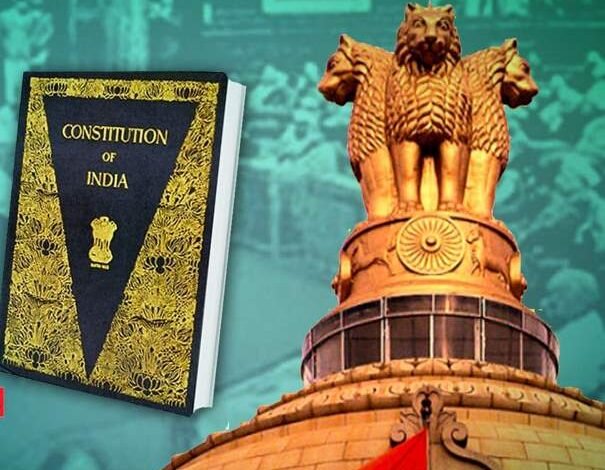
Equality is not a static concept. It breathes, shifts, and evolves, shaped by the courts that interpret it, the legislatures that codify it, and the people who fight for it. In India, the constitutional promise of equality is both radical and unfinished. Radical, because the framers dared to embed a transformative vision of justice into the foundational law of a deeply unequal society. Unfinished, because the distance between that vision and lived reality remains, for millions, painfully wide.
Indian Constitution is best understood not as a fixed legal guarantee, but as an evolving constitutional commitment. While the constitutional framework of Articles 14 to 18 provides a powerful normative foundation, formal legal equality has repeatedly proven insufficient to address structural disadvantage rooted in caste, gender, and sexuality. Further, it argues that the persistent gap between judicial recognition and legislative action represents one of the most critical challenges facing India’s equality project today, and that closing this gap requires not only legal reform, but a deeper political and social commitment to inclusion.
Equality: Promise, Reality, and the Long Road Between
Equality is one of those words that sounds simple until you try to live it. In a courtroom, a constitution, or a political speech, it rolls off the tongue effortlessly. All persons are equal. No one shall be discriminated against. Every individual deserves dignity. These are beautiful sentences. But in a country like India, where a person’s life chances are still shaped by the caste they were born into, the gender assigned to them, the religion they follow, or the community they belong to, equality is not a fact. It is a promise. And promises, as history shows, can be kept or broken.
The oldest debate in equality law is deceptively simple: does treating everyone the same actually make things equal? Formal equality says yes. Give everyone identical treatment, apply the law uniformly, and fairness will follow. But this logic breaks down quickly when you remember that people do not start from the same place. If one person begins the race fifty metres behind, making them run the same distance is not fairness, it is the appearance of fairness masking a deeper injustice. Substantive equality recognises this. It says that sometimes, equal outcomes require unequal treatment. It says that justice must account for history.
This was precisely the understanding that shaped the Indian Constitution. Its architects were not naive about the society they were building for. They had seen untouchability, they had seen purdah, they had seen communities systematically excluded from land, education, and dignity for generations. So, they built something more than a document of formal rights. They built, in the words often used to describe it, a transformative constitution, one that did not merely describe India as it was but aspired to remake it into something better.
The equality provisions in Articles 14 to 18 reflect this ambition. Article 14 guarantees equality before the law and equal protection of laws. Article 15 prohibits discrimination on grounds such as religion, race, caste, sex, or place of birth but crucially, it also allows the state to make special provisions for women, children, and backward classes. Article 16 extends equality to public employment and enables reservations. Article 17 abolishes untouchability. Read together, these provisions make clear that the Constitution never mistook sameness for justice.
Much of this vision belongs to Dr. B.R. Ambedkar. He understood, with the clarity that came from lived experience, that political equality on its own is fragile. You can give a person a vote without giving them a voice. You can give them a right without giving them the power to exercise it. Ambedkar believed that genuine equality required social and economic transformation, not just legal declaration. That conviction runs through the Constitution like a spine.
Nowhere has the gap between constitutional promise and lived reality been more visible than in the lives of women. India’s legal framework has come a long way. The Hindu Succession (Amendment) Act, 2005 gave daughters equal rights in ancestral property. The Supreme Court’s decision in Vishaka v. State of Rajasthan forced the issue of workplace sexual harassment into the legal vocabulary, eventually producing the Sexual Harassment of Women at Workplace Act, 2013. The Vineeta Sharma judgment settled the question of daughters’ coparcenary rights once and for all.
These are real victories. But they sit alongside stubborn, structural realities. Women are still paid less for the same work. They remain underrepresented in Parliament, in boardrooms, in courts. Domestic violence persists at alarming rates. And the marital rape exception: the legal rule that effectively denies a wife’s right to refuse her husband remains intact in Indian criminal law, a quiet but glaring statement about how far the law’s commitment to women’s autonomy truly extends.
The problem is rarely the absence of law alone. It is that law, by itself, cannot undo the weight of patriarchy, caste, and community pressure that operates every day in kitchens, fields, and families. Implementation is weak. Social stigma is strong. And the distance between what the Constitution says and what a woman in a village can actually access remains vast. The story of transgender and LGBTQ+ rights in India is, in many ways, a story about the judiciary running ahead of the legislature and the legislature failing to keep up.
In 2014, the Supreme Court’s judgment in NALSA v. Union of India was a watershed moment. The Court recognised transgender persons as a third gender, affirmed their right to self-identify, and directed the state to provide legal recognition and affirmative action. It was a ruling that centred dignity, autonomy, and constitutional equality in a way Indian law had never done before for this community.
Five years later, Parliament passed the Transgender Persons (Protection of Rights) Act, 2019. It should have built on NALSA’s foundation. Instead, it introduced bureaucratic certification processes that effectively subjected gender identity to administrative gatekeeping precisely the opposite of what the Court had envisioned. No reservations. Weak enforcement. Lower penalties for offences against transgender persons than for comparable offences against others. The gap between the constitutional ideal and the legislative response could hardly have been wider.
The LGBTQ+ story took its own sharp turn in Navtej Singh Johar v. Union of India in 2018, when the Supreme Court struck down Section 377 and decriminalised same-sex relationships. It was a ruling of profound moral weight. And yet, just a few years later, in Supriyo v. Union of India, the same institution declined to recognise same-sex marriage, leaving queer couples without access to inheritance rights, adoption, medical decision-making, and the basic legal protections that flow from recognised partnership. Constitutional recognition had arrived, but legal equality had not followed it home.
Through all of this, the Supreme Court has been a vital force. Decisions like E.P. Royappa, which held that equality is antithetical to arbitrariness, expanded Article 14 into a living principle rather than a technical formula. Vishaka created rights where Parliament had been silent. NALSA and Navtej Johar pushed the boundary of who the Constitution’s equality guarantees were for.
But the Court has also hesitated. Koushal reinstated Section 377 before Navtej reversed it. Supriyo left same-sex couples in a legal limbo. These moments remind us that courts interpret; they do not legislate. They can open doors, but they cannot furnish the rooms behind them. That work belongs to Parliament, to state governments, to institutions, and ultimately to society itself.
Writer
Anjali Yadav
Ba.LLB (H)
Amity Law School